The TNEXT Intermodal Transport Unit Tracking System is a platform that provides real time data on the key integration process between rail and road freight transport modalities. The key integration is divided between arrivals and departures.
Arrival units are marked to arrive by rail and they are tracked since their arrival at the station. In the pilot action, it was selected the rail station of Fossacesia/Torino di Sangro. Once arrived at station, a beacon device is added to the unit, linked to the platform. The system then starts marking each step of the process, by tracking the shunting of the unit, the arrival at terminal, the unloading, the place in storage and the gate out of the unit at terminal, done by truck to complete the last mile road operations.
The departure units are marked to arrive by road at terminal and they are tracked since their arrival at terminal. In the pilot action, it was selected the intermodal terminal of TISV, at Saletti, in southern Abruzzi region.
Once arrived at terminal, a beacon device is added to the unit, linked to the platform. The system then starts marking each step of the process, by tracking the gate in of the unit at terminal, the potential place in storage, the shunting of the unit, the arrival at station and the rail departure, done by rail, to complete the service.
The system is a web-based platform which will be integrated through i-frame technologies to the other pilots of the project and to the former Transpogood functionalities.
In March 2011, the European Commission adopted the White Paper 2011 “Roadmap to a Single European Transport Area – Towards a competitive and resource efficient transport system”2, defining a long-term strategy to make European Union transport system more efficient, safe and secure. The 2011 White Paper identifies ten goals for a competitive and resource-efficient transport system, which serve as benchmarks for achieving the 60% GHG emissions reduction target.
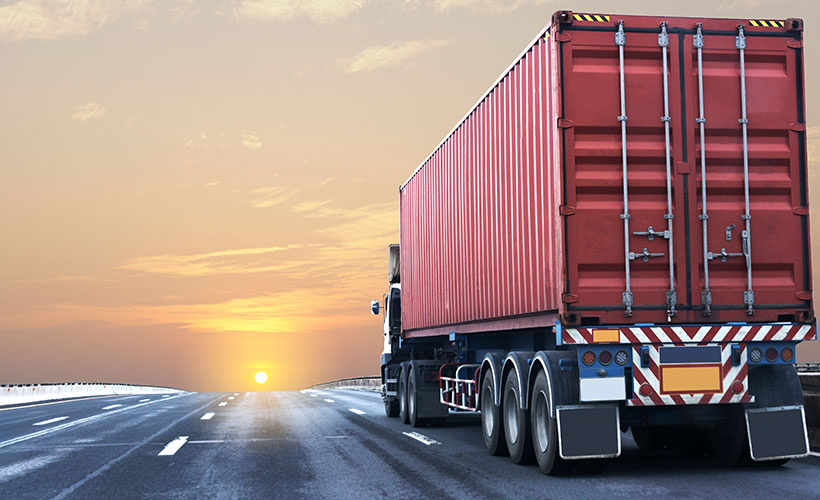
Among its goals, the White Paper sets that 30% of road freight over 300 km should shift to other modes such as rail or waterborne transport by 2030, and more than 50% by 2050, facilitated by efficient and green freight corridors. In order to achieve this objective, various initiatives have been implementing at European level: e.g. the strengthening of the high speed railways and completion of the TEN-T3 infrastructure network; the motorways of the sea initiative4; the Marco Polo Programme5, closed programme fostering intermodal alternative solutions.
Despite the efforts and actions undertaken at both European and national level in favour of “sustainable transport”, in the European Union the road mode is still largely predominant (48% of total transported freight6). In this context, Regional and National Authorities often set up incentive schemes to encourage a rebalance in the modes of transporting goods, by supporting the utilisation of less polluting modes of transport -different from the all-road one (modal shift).
1 Deliverable 3.1.1
2 WHITE PAPER Roadmap to a Single European Transport Area – Towards a competitive and resource efficient system/COM/2011/0144 (https://eur-lex.europa.eu/legal-content/EN/ALL/?uri=CELEX:52011DC0144 ).
3 Programme established by the European Commission in 2004 to support the construction and upgrade of transport infrastructure across the European Union (s. https://ec.europa.eu/inea/en/ten-t ).
4 Concept introduced with the 2001 Transport White Paper, aiming at introducing new intermodal maritime-based logistics chains ( s. https://ec.europa.eu/transport/modes/maritime/motorways_sea_en ).
5 see. https://ec.europa.eu/transport/marcopolo/
6 data from Eurostat 2016.